| Safe Haskell | None |
|---|---|
| Language | Haskell2010 |
Libnotify
Description
High level interface to libnotify API
- data Notification
- display :: Mod Notification -> IO Notification
- display_ :: Mod Notification -> IO ()
- close :: Notification -> IO ()
- data Mod a
- summary :: String -> Mod Notification
- body :: String -> Mod Notification
- icon :: String -> Mod Notification
- timeout :: Timeout -> Mod Notification
- data Timeout
- category :: String -> Mod Notification
- urgency :: Urgency -> Mod Notification
- data Urgency
- image :: Pixbuf -> Mod Notification
- class Hint v where
- nohints :: Mod Notification
- action :: String -> String -> (Notification -> String -> IO a) -> Mod Notification
- noactions :: Mod Notification
- appName :: String -> Mod Notification
- reuse :: Notification -> Mod Notification
- class Monoid a where
- (<>) :: Monoid m => m -> m -> m
Notification API
display :: Mod Notification -> IO Notification Source #
Display notification
>>>token <- display (summary "Greeting" <> body "Hello world!" <> icon "face-smile-big")

You can reuse notification tokens:
>>>display_ (reuse token <> body "Hey!")

display_ :: Mod Notification -> IO () Source #
Display and discard notification token
>>>display_ (summary "Greeting" <> body "Hello world!" <> icon "face-smile-big")
close :: Notification -> IO () Source #
Close notification
Modifiers
summary :: String -> Mod Notification Source #
Set notification summary
>>>display_ (summary "Hello!")


icon :: String -> Mod Notification Source #
Set notification icon
>>>display_ (icon "face-smile")
The argument is either icon name or file name

Timeout after which notification is closed
The urgency level of the notification
Add a hint to notification
It's perfectly OK to add multiple hints to a single notification
Minimal complete definition
nohints :: Mod Notification Source #
Remove all hints from the notification
Arguments
| :: String | Name |
| -> String | Button label |
| -> (Notification -> String -> IO a) | Callback |
| -> Mod Notification |
Add an action to notification
It's perfectly OK to add multiple actions to a single notification
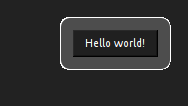
>>>display_ (action "hello" "Hello world!" (\_ _ -> return ()))
noactions :: Mod Notification Source #
Remove all actions from the notification
>>>let callback _ _ = return ()>>>display_ (summary "No hello for you!" <> action "hello" "Hello world!" callback <> noactions)

reuse :: Notification -> Mod Notification Source #
Reuse existing notification token, instead of creating a new one
If you try to reuse multiple tokens, the last one wins, e.g.
>>>foo <- display (body "foo")>>>bar <- display (body "bar")>>>display_ (base foo <> base bar)
will show only "bar"

Convenience re-exports
The class of monoids (types with an associative binary operation that has an identity). Instances should satisfy the following laws:
mappend mempty x = x
mappend x mempty = x
mappend x (mappend y z) = mappend (mappend x y) z
mconcat =
foldrmappend mempty
The method names refer to the monoid of lists under concatenation, but there are many other instances.
Some types can be viewed as a monoid in more than one way,
e.g. both addition and multiplication on numbers.
In such cases we often define newtypes and make those instances
of Monoid, e.g. Sum and Product.
Instances
| Monoid Ordering | |
| Monoid () | |
| Monoid All | |
| Monoid Any | |
| Monoid ByteString | |
| Monoid IntSet | |
| Monoid [a] | |
| Monoid a => Monoid (Maybe a) | Lift a semigroup into |
| Monoid a => Monoid (IO a) | |
| Ord a => Monoid (Max a) | |
| Ord a => Monoid (Min a) | |
| Monoid a => Monoid (Identity a) | |
| (Ord a, Bounded a) => Monoid (Min a) | |
| (Ord a, Bounded a) => Monoid (Max a) | |
| Monoid m => Monoid (WrappedMonoid m) | |
| Semigroup a => Monoid (Option a) | |
| Monoid a => Monoid (Dual a) | |
| Monoid (Endo a) | |
| Num a => Monoid (Sum a) | |
| Num a => Monoid (Product a) | |
| Monoid (First a) | |
| Monoid (Last a) | |
| Monoid (Seq a) | |
| Monoid (IntMap a) | |
| Ord a => Monoid (Set a) | |
| Monoid (Mod a) # | |
| Monoid b => Monoid (a -> b) | |
| (Monoid a, Monoid b) => Monoid (a, b) | |
| Monoid (Proxy k s) | |
| Ord k => Monoid (Map k v) | |
| (Monoid a, Monoid b, Monoid c) => Monoid (a, b, c) | |
| Monoid a => Monoid (Const k a b) | |
| Alternative f => Monoid (Alt * f a) | |
| (Monoid a, Monoid b, Monoid c, Monoid d) => Monoid (a, b, c, d) | |
| (Monoid a, Monoid b, Monoid c, Monoid d, Monoid e) => Monoid (a, b, c, d, e) | |